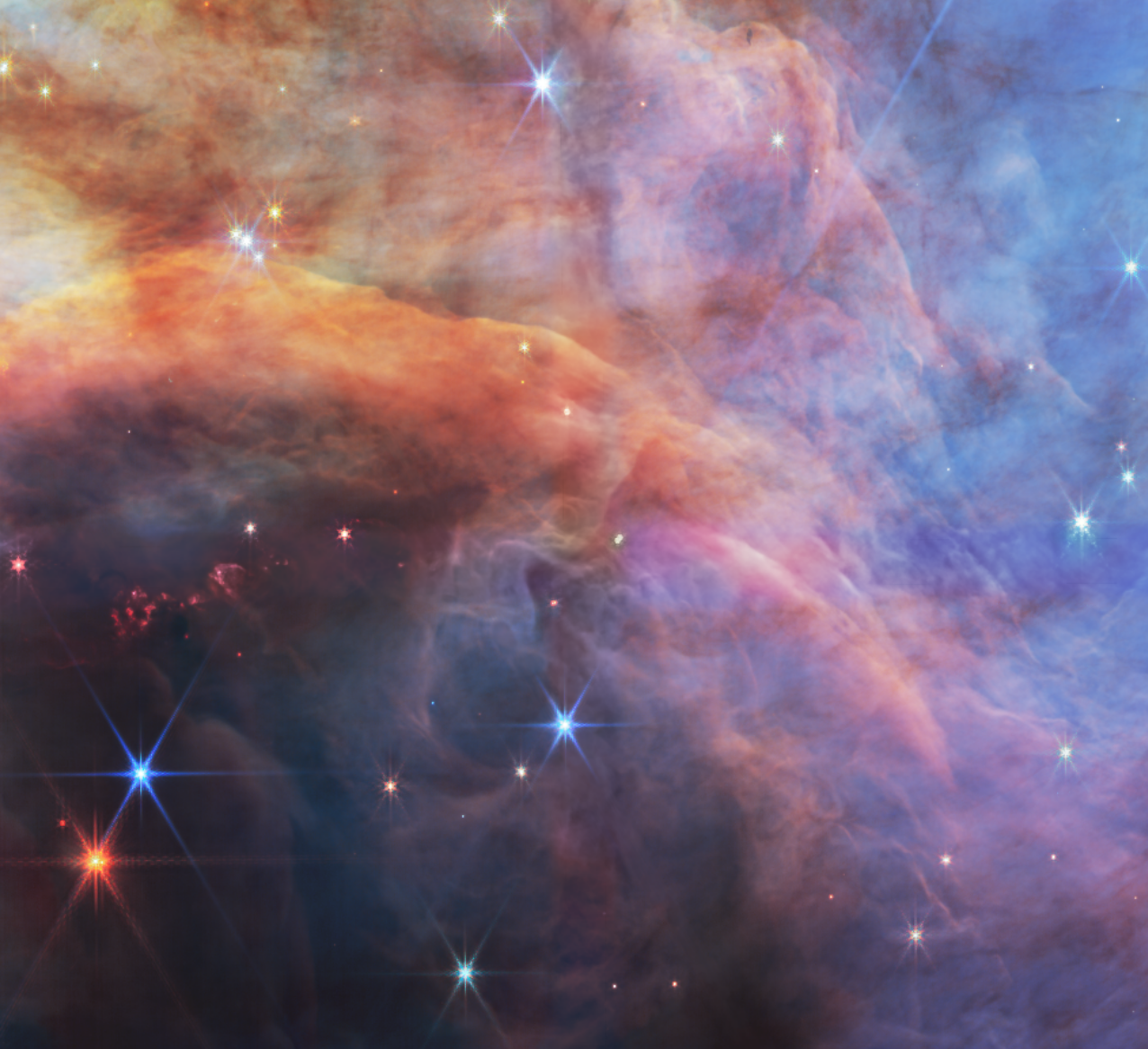
The first identification of a turnover in the initial mass function within a stellar population, NGC 2024. See link for NASA Press Release.
In Austin, I work with Lifelong Learning with Friends, an organization that provides continuing education courses for adults with intellectual and developmental disabilities (IDDs). While many programs for adults with IDDs focus on job training skills, LLwF focuses on courses for the sake of learning, something frequently absent in programs for adults with IDDs. Our classes meet once per week for two hours over a six week period. These courses are designed as engaging, college-level courses which are taken alongside volunteers, many of which are UT students. Our classes range from completely hands-on experiment based to a combination of lecture and breakout activity sessions. As people with disabilities exist throughout the world, there is a need for classes like these where you live too! If you are interested in hosting your own classes where you live, please contact me and I would be happy to work with you to setup classes in your area.
In summer 2025, I designed and taught this introductory astronomy course for LLwF. We discussed topics ranging from the solar system and star formation to black holes and galaxies, incorporating hands-on activities like the gravity well experiment and the Galaxy Zoo into the lesson plan. Here are links to the slideshows for each of the classes:
Week 2: Star Formation and Evolution
Week 3: Stellar Remnants and Exotic Astrophysical Phenomena
Week 5: Galaxies and the Universe
Week 6: Aliens and Life Beyond Earth
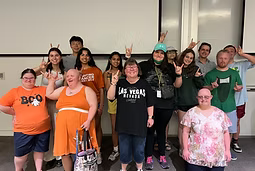
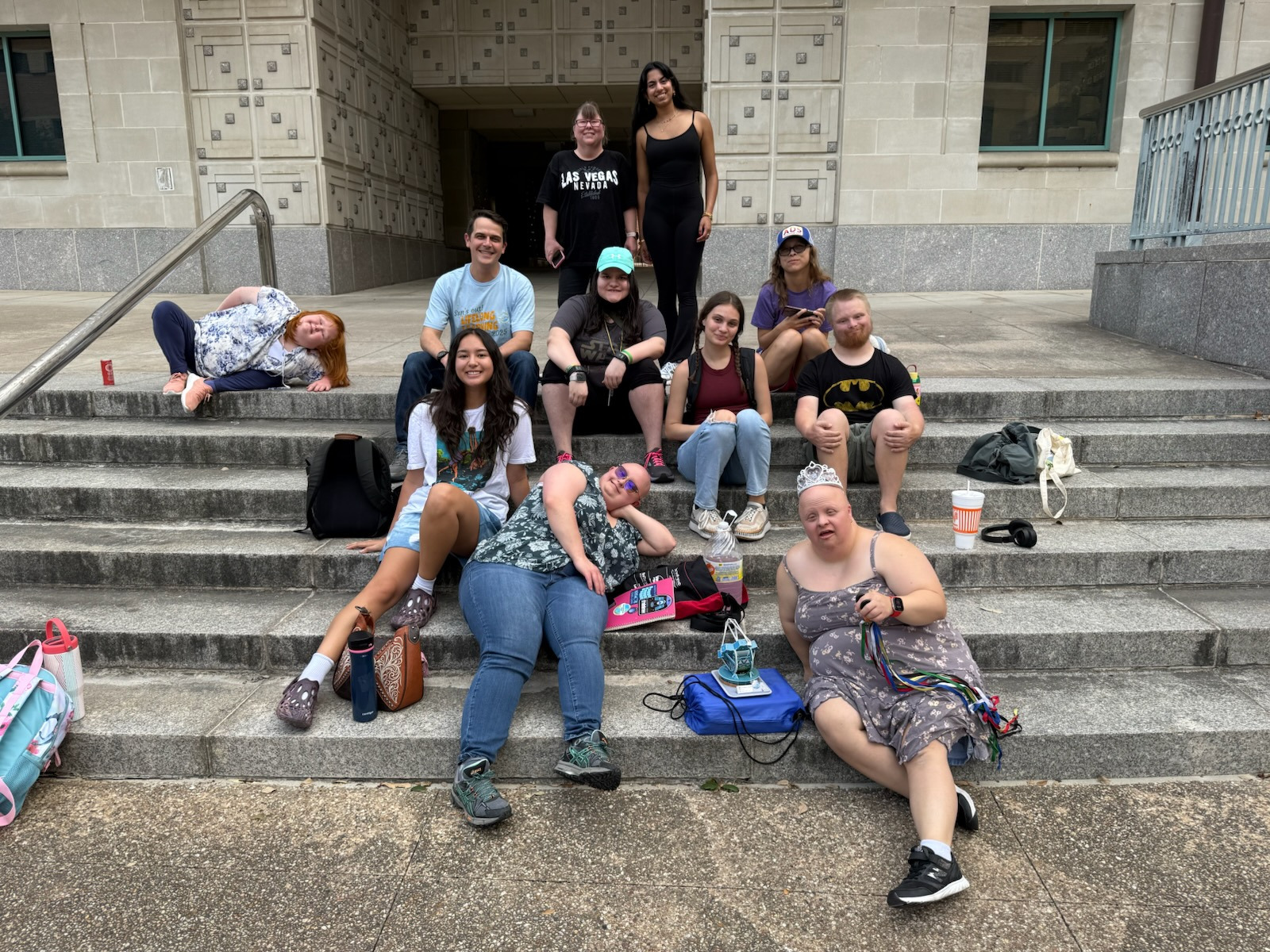
In fall 2025, I designed and taught another course for Lifelong Learning with Friends called "Observing the Cosmos" where we used campus telescopes every week for six weeks to observe and monitor various astronomical objects to determine any differences over time, such as the sunspots on the Sun and the phases of the Moon. We also observed binary stars and the planets in the Solar System. Each class included a lecture on the specific topic and how our observations allow us to understand the science behind these objects.
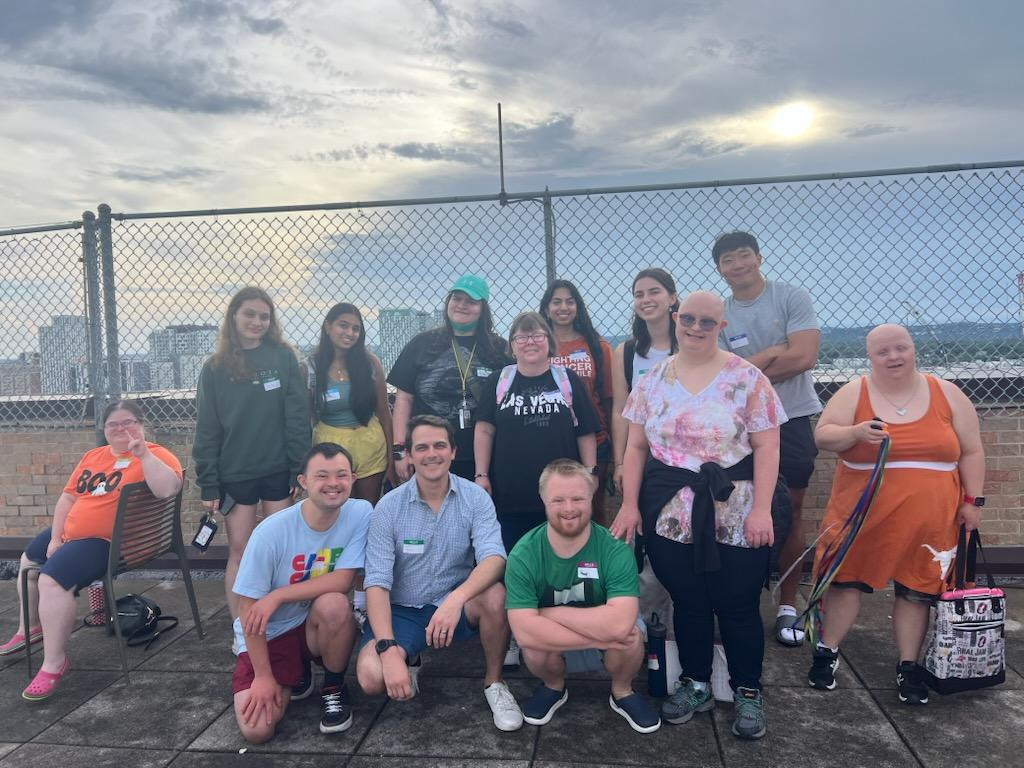
I taught another course for Lifelong Learning with Friends called "The Science of Science Fiction" where we covered topics such as light sabers, wormholes, and time travel.
In our first week, we talked about Solar System travel and exploration, first introducing the solar system itself, then digging into topics such as upcoming Artemis missions to land on the Moon and build a base, the prospects for going to Mars, and the potential for surviving on other places in the solar system such as Europa or Pluto. We drew inspiration from NASA videos from the Perseverance rover, the TV show "For All Mankind" and the movie "The Martian". Check out the slides here.
In our second week, we talked about the possibility of interstellar travel. We talked about how NASA has launched hundreds of space probes, their speeds, and the use of gravity assists. We then did some math to figure out how long it would take Voyager 1 to get to the closest star and closest galaxy, and discussed distance scales between stars relating it to the size of every day objects. We discussed the possibility of suspended animation and building a civilization on a ship, drawing inspiration from "Avatar" and "WALL-E". We finished our class with a conversation about flying warp speed and the possibility of a worm hole. Check out the slides here.
In our third week, we talked about Einstein's theory of special relativity and how time passes differently for people moving at different speeds, using the Flash running at light speed on a train to visualize the concept. We also covered the theory of general relativity, showing time dilation caused by strong gravity, as shown in Interstellar. We then demonstrated space-time and gravity using the gravity well demonstration. We then takled about the speed of light, and how even at this speed, light can take a long time to travel from distant places. This makes long-distance communication really hard as demonstrated in The Martian, where it takes 40 minutes to get a reply after sending a message from Mars. This then us to discussing how the light we see from objects very far away takes a very long time to reach us, e.g. 2.5 million years to recieve light from the Andromeda Galaxy. Check out the slides here.
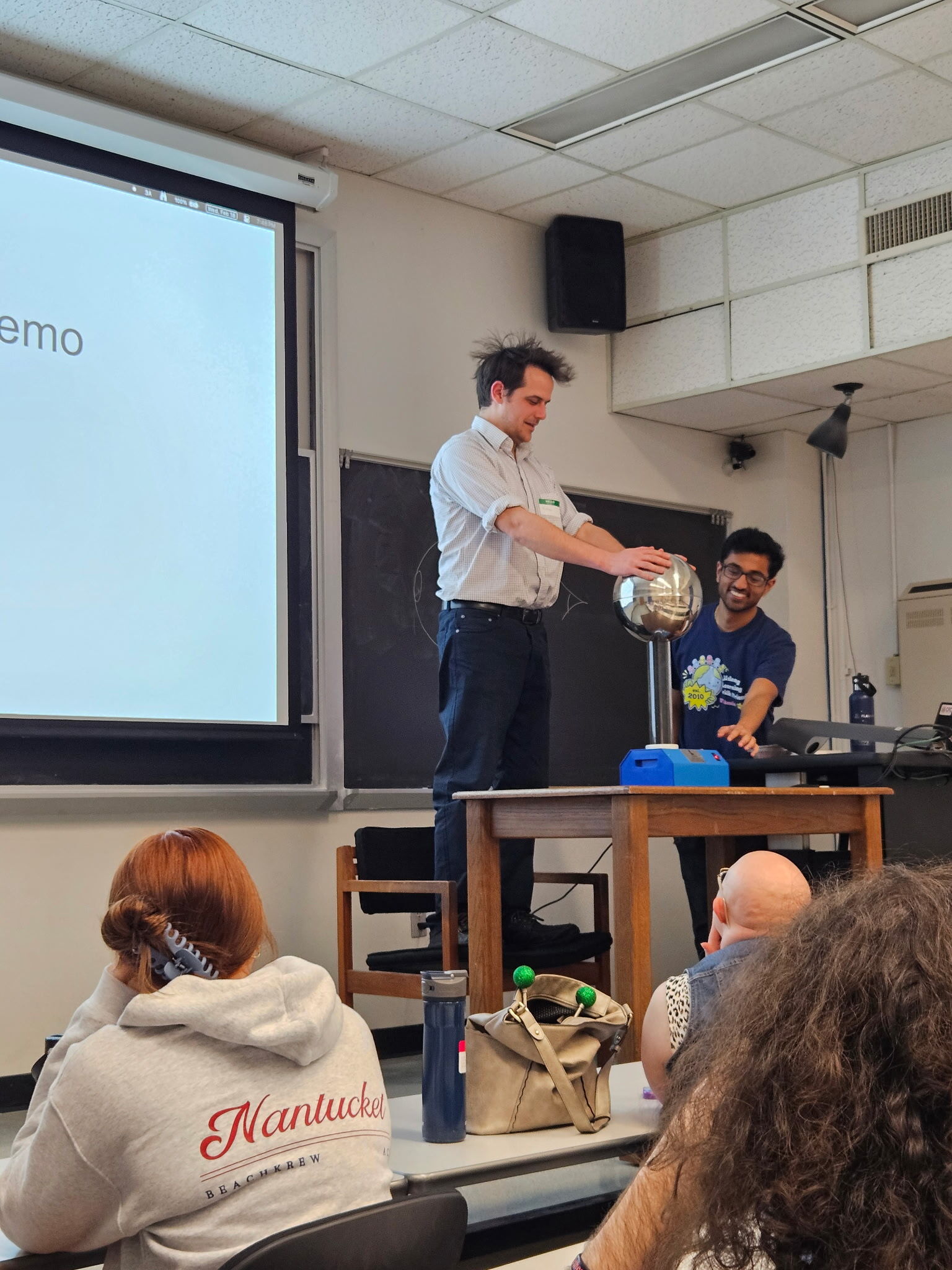
In our fourth week, we discuss weapons seen in science fiction. We first talked about lasers, the physics behind them, and realistic weapons that can be made from them. We then talked about lightsabers, demonstrating that we cannot make these weapons from our knowledge of lasers, but that plasma guns could be an alternative. We also discussed using lightning as a weapon (as seen in Star Wars), showing a real demonstration of a Van de Graaff machine (see my hair below), and several examples of Tesla coils. We learned that many of these weapons have actually been designed and used in real life by several militaries, e.g. laser weapons to shoot down drones and sonic cannons to disrupt crowds. Check out the slides here.
In our fifth week, we continued our discussion of science fiction weapons, this time focusing on large weapons. We first discussed the Archimedes Death Ray, long mythologized to have set Roman ships on fire. We then discussed how unrealistic constructing a Death Star like weapon is, both in terms of gathering enough materials and producing lasers that powerful. We then discussed kinetic energy weapons, showing a demonstration using a giant sand pit and different weighted balls. Heavy objects dropped at high distances made the biggest craters. Lastly, we discussed how difficult hand-to-hand combat would be in space without gravity due to the different types of maneuvering than which we are accustomed. Check out the slides here.
In our last week, we had a pizza party before we began talking about artificial intelligence and mind reading. We talked about what the current state of AI really is, e.g. machine learning and large language models, and compared that to AI in famous movies like Big Hero 6 and 2001: A Space Odyssey. We discussed how we would determine whether an AI was actually a thinking being or just following programmed instructions. Then, we concluded by discussing mentalism and hypnosis and how they are really just tricks based on suggestion rather than a Jedi Mind Trick. Check out the slides here.
I taught another course for Lifelong Learning with Friends called "Exoplanets and Life Beyond Earth" where we covered topics such as distant exoplanets, why we have not found extraterrestrial life yet, and biosignatures.
In our first week, we talked about the Solar System. We first talked about the configuration of the Solar System before exploring their relative sizes and distances and what makes rocky planets different from giant planets. Then, we discussed each planet in detail, focused on their composition, atmospheres, surface features, water content, and their mooons and rings if any. We went to the roof of the astronomy building to look at Saturn and its rings and Jupiter and its moons. We finished up class talking about the various types of moons in the Solar System, unique features of particularly interesting moons (like Europa and Enceladus) and some future NASA missions to them. Check out the slides here.
In our second week, we learned about different definitions of life, including some common ways that we classify life: an organism that is made from cells, eats food, grows, reacts to its environment, is capable of evolving, and can reproduce. We talked about evolution and how organisms adapt to their surroundings by thinking about the color of bugs. We learned that any definition we came up with has some flaw that could be controversial, and that lifeforms may exist in other ways than what we are used to on earth. We then talked about where life could hide in the solar system, investigating various planets and moons like Europa because it has an ocean. Check out the slides here.
In our third week, we learned all about how we can detect exoplanets. We discussed the physics behind the four most commonly used techniques: the transit method, doppler method, microlensing, and direct imaging. We then discussed what types of planets can be found using each technique. We finished off class by thinking about what planets that we know of that are hard to find with our current technology and what we should be able to detect in the future. Check out the slides here.
In our fourth week, we talked about the different types of planets that we have detected that do not exist within the solar system. We discussed hot Jupiters and placed their temperature in context of things on Earth, and learned that the temperature of hot Jupiters is similar to that of a volcano or even an industrial furnace. We also talked about lava worlds and Super-Earths. We explored the "Goldilocks" zone of a star and the potential for finding life on any of these other types of planets. We talked about a few very famous planetary systems that are potential targets of habitability, e.g. TRAPPIST-1 and K2-18b. Check out the slides here.
In our fifth week, we talked about potential ways to find life on exoplanets. We discussed finding biosignatures in planet atmospheres, detecting communication signals like radio waves, and finding technological signatures like Dyson spheres. We studied the main biosignatures you could find on Earth, e.g. molecular oxygen, carbon dioxide, and ozone, and relating that to natural life processes such as how plants convert water and carbon dioxide into energy and oxygen. We then talked about searching for the "red edge" in exoplanet spectra and seasonal changes in specific molecules. Then, we discussed spectroscopy and how these different biosignatures could be detected with telescopes given their different molecular absorption features. We then discussed the Drake equation and estimated how many planets could have intelligent species there may be. Check out the slides here.
In our last week, we had a pizza party before we discussed aliens! We learned that we have already tried to contact aliens twice using the Arecibo telescope and the Voyager probe. We talked about Voyager's golden disk and what we would put on the disk. We then watched several clips from different sci-fi movies, such as Star Wars and Arrival, and used our knowledge from this course to determine what the movies did right and what they did wrong when it comes to depicting aliens. We finished off our class by reviewing the entire course. Check out the slides here.
I will teach another course in the Summer of 2026 all about space exploration, the history of the space race, and current and future space exploration missions. Visit the LLwF website in the near future to sign-up! I will post the slideshows here after each class is completed.
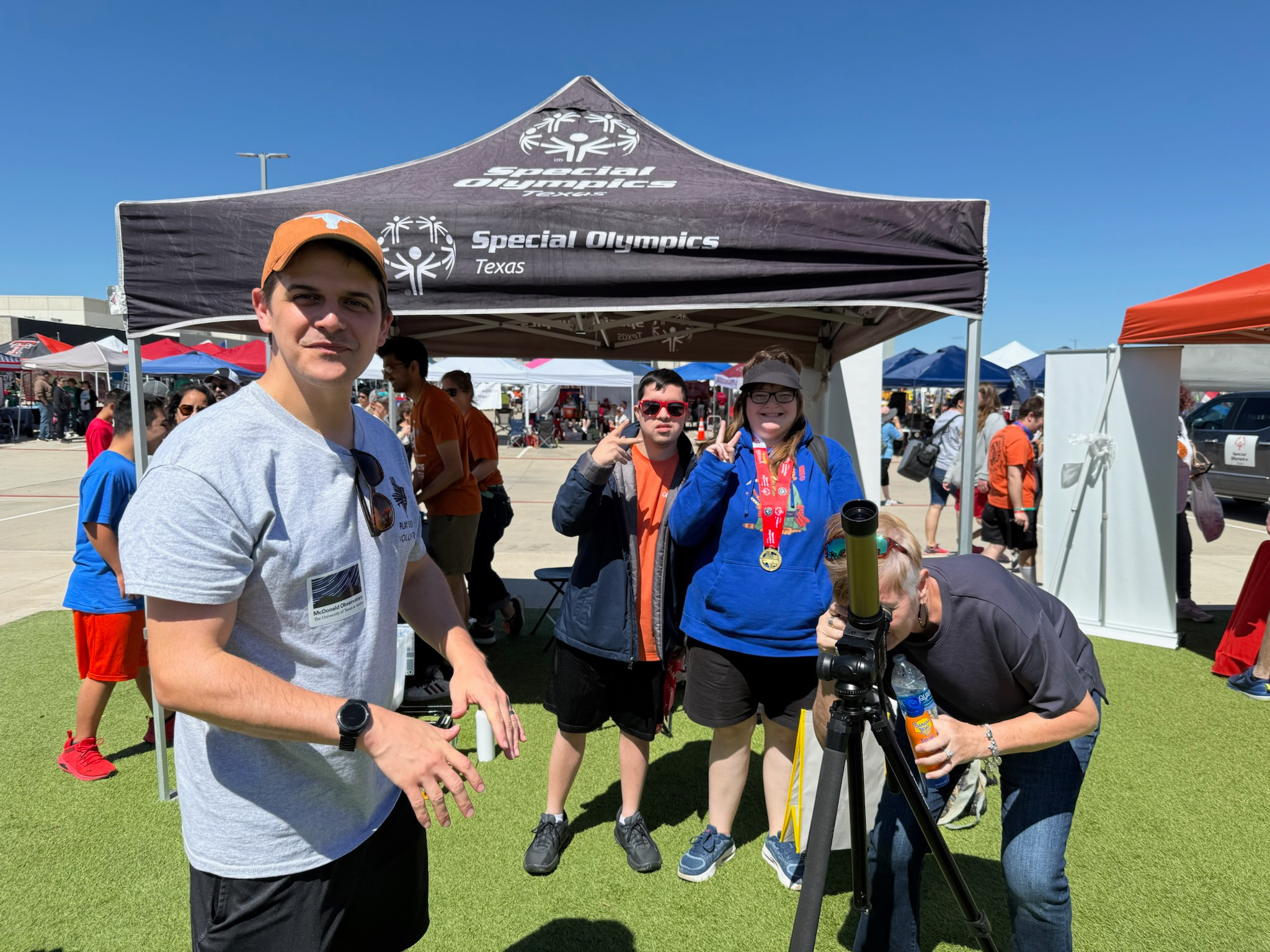
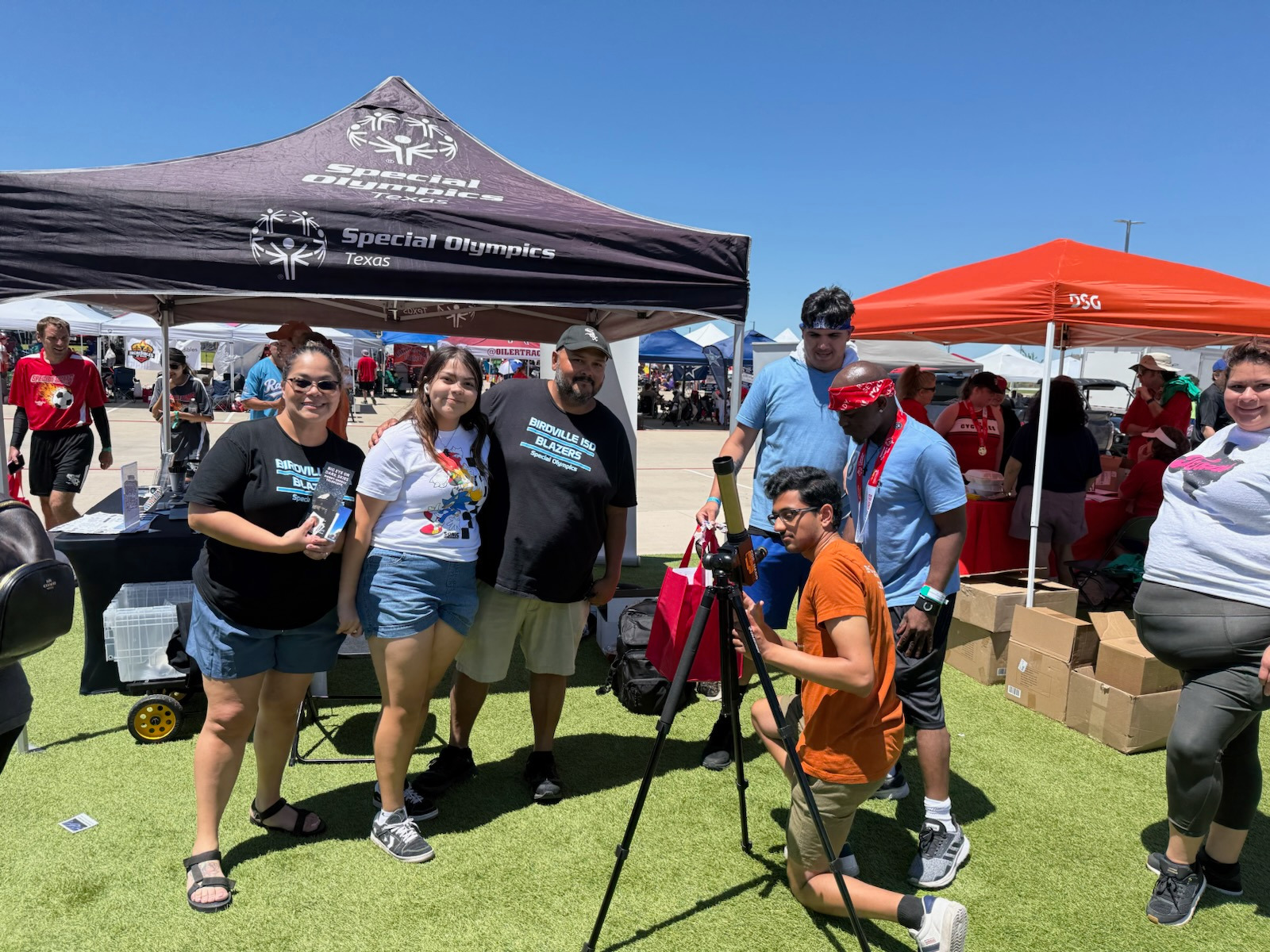
I took a group from UT to Melissa, TX for the Special Olympics Texas Summer Games in May 2025 where we brought telesecopes to observe the Sun and the Moon. We had over 800 visitors to our booth where we answered questions about space and astronomy. We demonstrated how we can use these telescopes to observe the Sun, setup the telescopes for individual observing, and explained the physical reasons behind why we see sunspots and solar flares. Contact me if you are interested in holding a similar outreach event at your home institution!
The first identification of a turnover in the initial mass function within a stellar population, NGC 2024. See link for NASA Press Release.
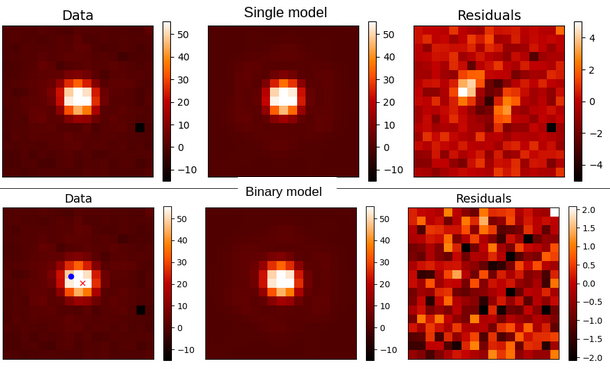
Detection of the second Y-Y dwarf binary system ever, WISE1935-1546, using JWST/MIRI probing the lowest mass binaries in the Galaxy. See link for paper.
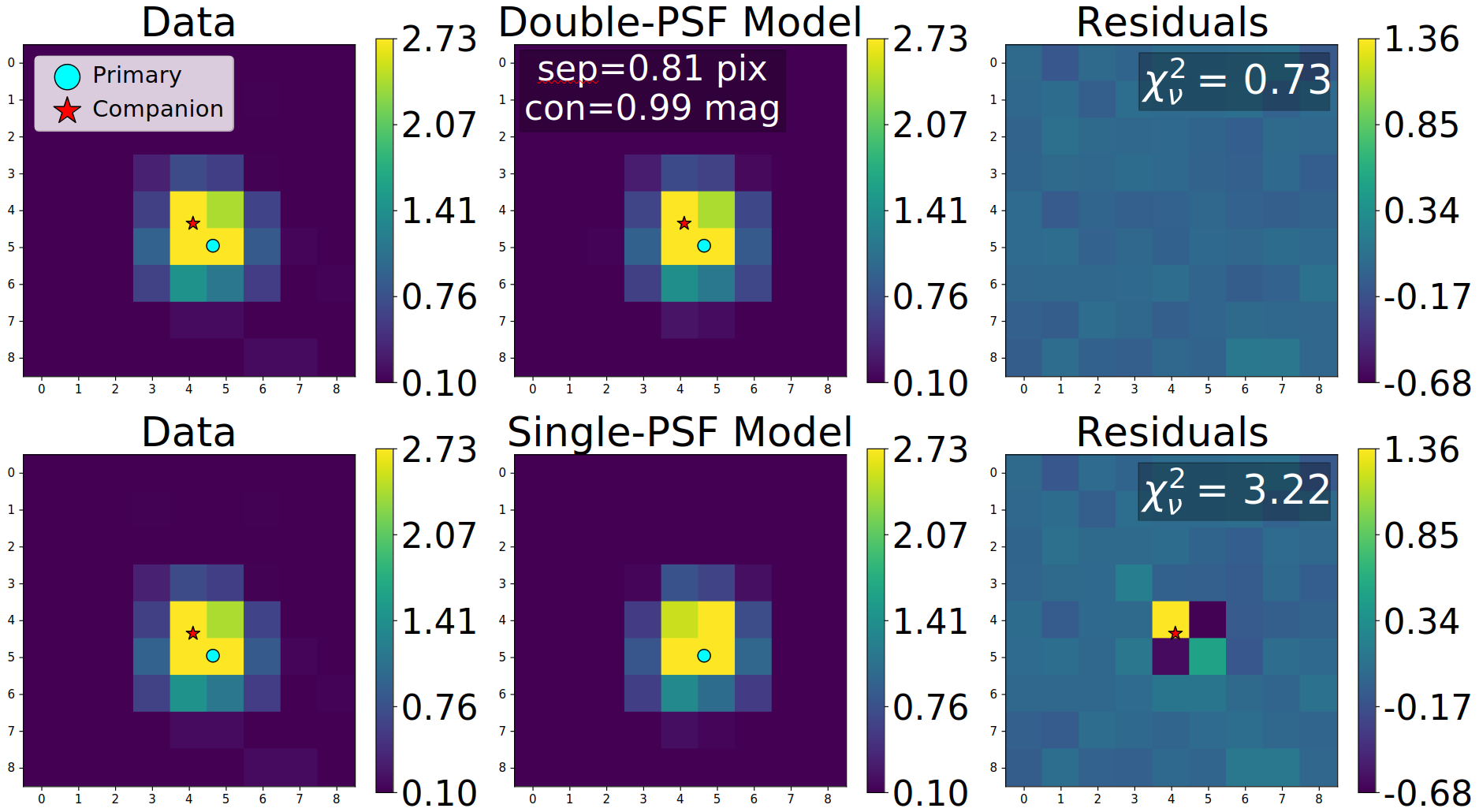
Resolving companions below the diffraction limit with HST WFC3/IR. See link for paper.
For inquiries about collaborations, details about my research and outreach, or general questions, please reach out to me through email.