Main Research Interests

Initial Mass Function

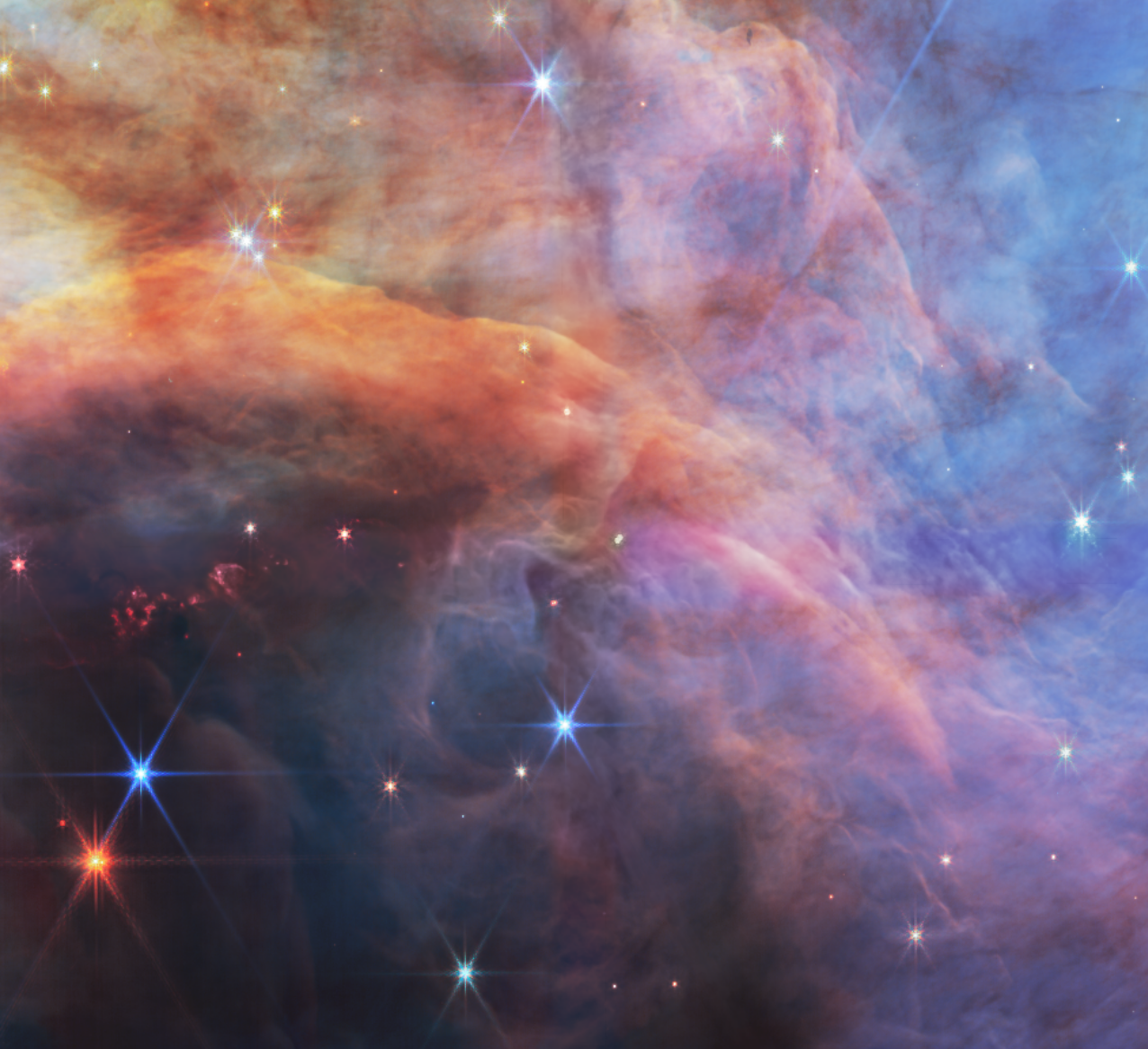
Stars, brown dwarfs, and planetary mass objects form through the fragmentation of turbulent molecular clouds. This process is limited by a pre-stellar core becoming opaque to its own colling emission, i.e. the opacity limit. Using the James Webb Space Telescope, I am working to characterize the opacity limit and shape of the initial mass function down to Jupiter mass scales.

Stellar Multiplicity

Multiplicity, two or more objects gravitationally bound, is a common outcome of turbulent fragmentation. I lead several programs with JWST, HST, Keck, Gemini, and the CHARA Array to characterize stellar multiplicity in star-forming regions and the Galactic field. My work attempts to understand the Galactic field population by determining how various star-forming environments impact the multiplicity of their populations and thus its contribution to the Galactic field.

Sub-stellar Multiplicity

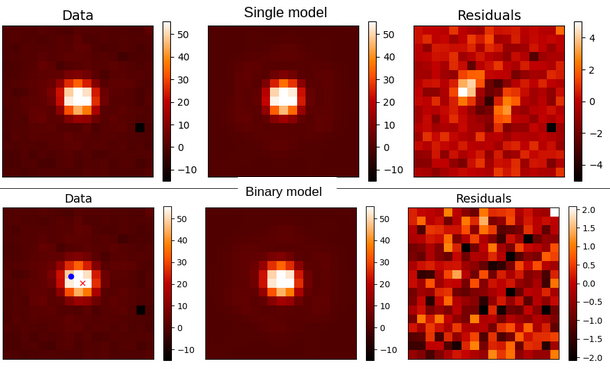
Multiple systems can theoretically form all the way down to the opacity limit of fragmentation. I lead several programs with JWST and HST to describe brown dwarf multiplicity in star-forming regions and the Galactic field. This work led to the discovery of the only two known Y-dwarf binaries using JWST.

Direct Imaging of Exoplanets

I am working on advanced imaging techniques to more efficiently search for exoplanets using wavefront sensing measurements and synthetic PSFs on JWST. I am also working on novel techniques to analyze complex imaging data with saturated PSFs to search for exoplanets using HST and JWST.

Population Statistics

Most of my work is designed to result in a statistical description of a population, e.g. companion frequency or gas giant occurrence rates. I have designed a Bayesian demographic analysis to perform this work, and my results point to important aspects of star and planet formation theory.

High Angular Resolution Observing Techniques

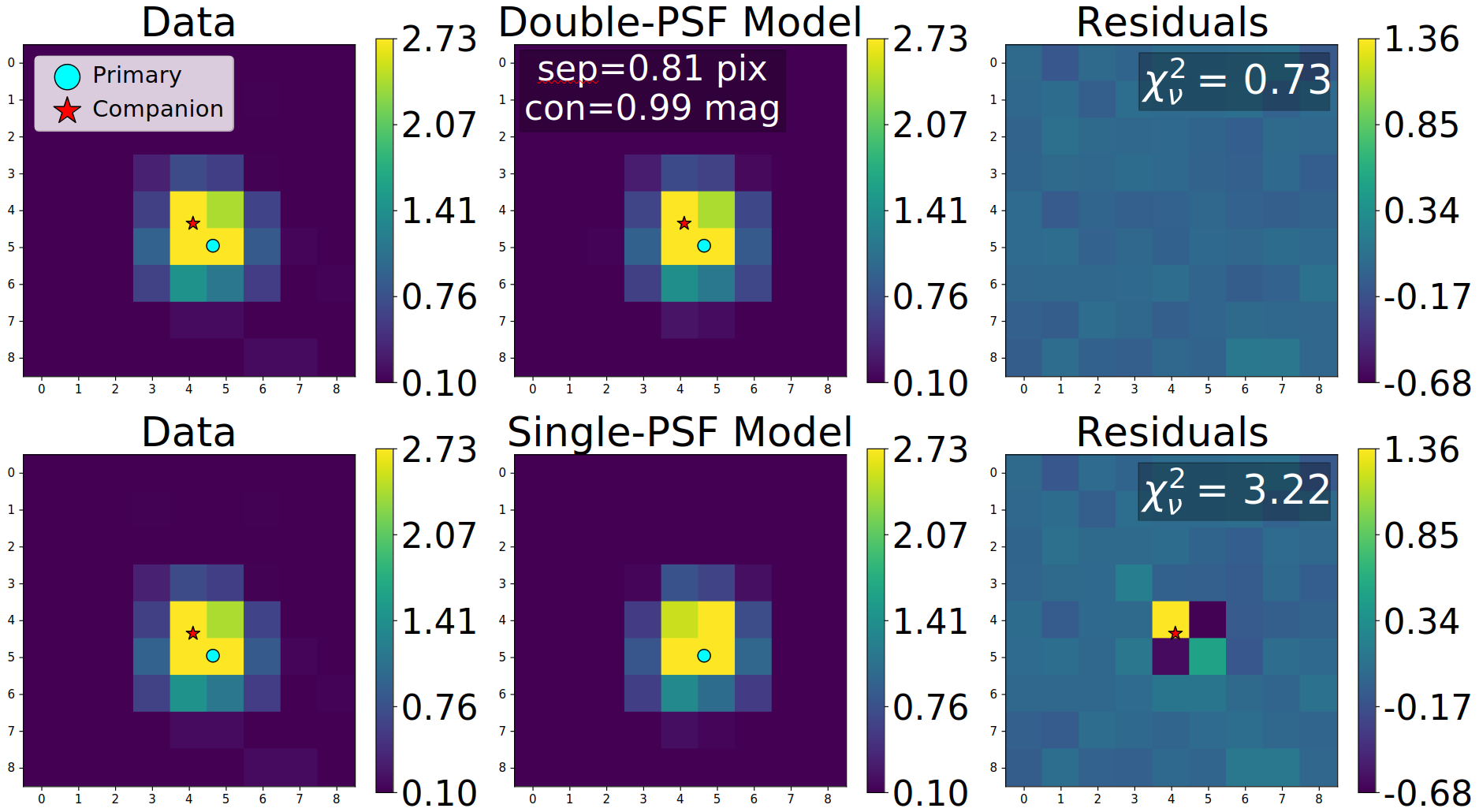
My above work can only be accomplished through thorough analysis of observational data. I have designed a double empirical point-spread function fitting code to identify companions on sub-diffraction limited scales with HST and JWST. I also work with aperture masking interferometry data on both Keck and JWST to search for companions at sub-diffraction limit scales. I lead a long-baseline interferometry program probing very close separations of nearby A-type stars.